Snorkelling in Majorca: the 10 best coves in Mallorca (2026)
Cabrera, sa Dragonera, Illa del Toro and seven more coves, with the rules of the marine reserves, water quality, buses and parking.

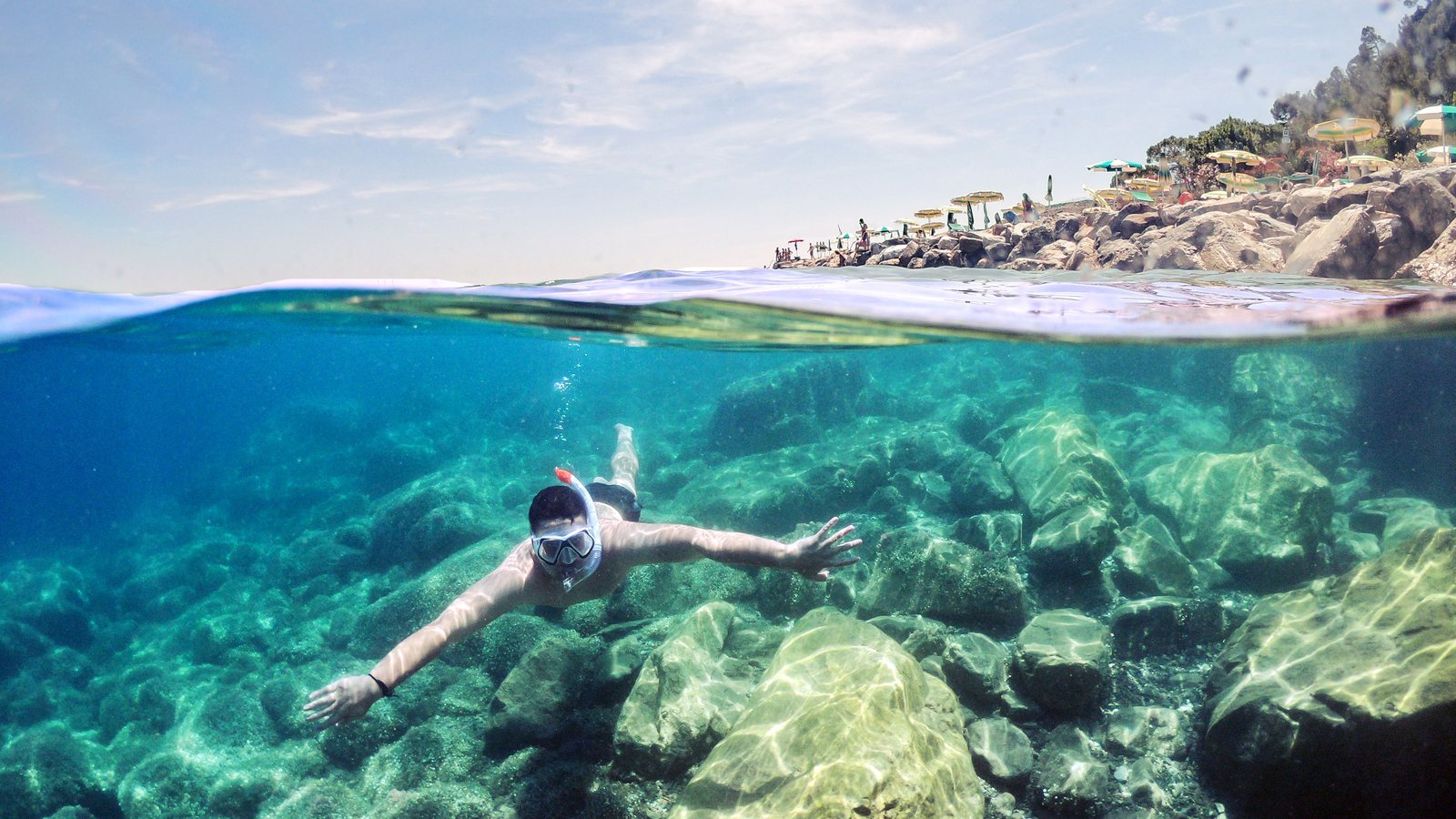
Our ten best coves for snorkelling in Mallorca are sa Platgeta on Cabrera, Cala en Lledó on sa Dragonera, Illa del Toro, Portals Vells, Sant Elm, Cala Llamp, Cala Fornells, Es Trenc, Cala Blava and Cala Molins. We ranked them by what the Balearic government and the local councils document on snorkelling and marine protection. Checked: October 2026.
The 10 snorkelling coves at a glance
| Rank | Cove | Municipality | Marine protection | Water (EU, 2025) | Without a car |
|---|---|---|---|---|---|
| 1 | Sa Platgeta and s'Espalmador | Cabrera archipelago | Cabrera National Park | no information | scheduled boat from Colònia de Sant Jordi |
| 2 | Cala en Lledó | Andratx (sa Dragonera) | Reserva marina, natural park | no information | scheduled boat |
| 3 | Illa del Toro (ses Penyes Roges) | Calvià | island: Zona d'Alta Protecció | good | bus 106, 123 |
| 4 | Portals Vells | Calvià | no information | no information | no |
| 5 | Sant Elm | Andratx | borders a Reserva marina | excellent | bus 121 |
| 6 | Cala Llamp | Andratx | no information | no information | no |
| 7 | Cala Fornells | Calvià | no information | no information | no |
| 8 | Es Trenc | Campos | Reserva Marina del Migjorn | excellent | no |
| 9 | Cala Blava | Llucmajor | next to the Badia de Palma reserve | excellent | bus 504 |
| 10 | Cala Molins | Pollença | no information | excellent | bus 321 |
"Bus" means there is a CTM intercity bus stop within 500 m of the beach. "No information" means the official sources say nothing about it. It does not suggest poor water or a lack of protection.
Marine reserves: what is allowed
Around the Balearic Islands there are twelve reserves marines (marine reserves) covering around 66,750 ha of sea in total (GOIB, Reserves marines). Those around Mallorca include the Badia de Palma, Migjorn, Llevant, Freu de sa Dragonera and Illes del Ponent reserves, the last one including el Toro. On top of that comes Cabrera National Park with its own rules.
- Snorkelling and freediving (apnoea): According to the Balearic government, both are allowed throughout the Badia de Palma, Migjorn, Llevant and Ponent reserves (GOIB, Migjorn). In the Freu de sa Dragonera reserve they are allowed throughout the regional zone and in the "ús restringit" (restricted use) zones of the national reserve (GOIB, sa Dragonera).
- Scuba diving: You need a separate permit for it in all reserves (GOIB, Normativa general). It is not allowed in the protected zones of the Badia de Palma and the Migjorn, and in the Llevant not in the Reserva integral (strict reserve) between cap de Ferrutx and Penya des Llamp (GOIB, Llevant). Night dives in the Badia de Palma need a special permit (GOIB, Badia de Palma).
- Feeding fish: This is banned in the Migjorn (GOIB, Migjorn).
- Caves and night dives in the Ponent: In the Illes del Ponent reserve you may not dive into sea caves. In the high-protection zones, night dives by solo divers are not allowed (GOIB, Ponent).
- Anchoring: Anchoring on seagrass (Posidonia oceanica) is banned as a rule in Balearic waters (Decret 25/2018, Art. 7.1, consolidated version as of 29 June 2021). In the designated buoy fields, boats must moor to a buoy and the anchor must not touch the seabed (GOIB, Cuidam la Posidònia). In Cabrera National Park anchoring is banned everywhere.
- Fishing from a boat: In the reserves this needs a separate permit, valid for three years (GOIB, Normativa general).
We give the rules as the Balearic government summarises them on its websites. We have not read the decrets (decrees) themselves word for word. The official text is binding.
1. Sa Platgeta and s'Espalmador, Cabrera
For Cabrera, the Balearic government itself recommends snorkelling at sa Platgeta and s'Espalmador: both have marked bathing zones that boats may not enter (GOIB, Cabrera National Park). At sa Platgeta there is also a self-guided underwater trail with boards on the fish species. The national park covers 89,478 ha of sea.
- Getting there: scheduled boat from Colònia de Sant Jordi, or your own boat with a navigation permit
- Good to know: You may only go ashore from the water at sa Platgeta and s'Espalmador. Because of boat traffic, you should not swim through the harbour zone.
- Rules: In May and June, freediving is banned along the stretches of coast where the species Scyllarides latus spawns. Diving needs a written permit, and anchoring is banned throughout the park.
2. Cala en Lledó, sa Dragonera
According to the Balearic government, Cala en Lledó is the beach on sa Dragonera where swimming is allowed and which you reach by scheduled boat (GOIB, sa Dragonera Natural Park). The clear water lets you see the seabed with fish and invertebrates between the seagrass meadows, which is why the government advises bringing a mask or goggles.
- Getting there: only by scheduled boat to the jetty at Cala en Lledó
- Protection: Since 2020 the island's entire shoreline has been part of the national Reserva Marina d'Interès Pesquer de l'Illa de Dragonera, 457 ha, of which 82 ha are Reserva integral (GOIB, sa Dragonera).
- Good to know: Take care with some invertebrates such as anemones.
3. Illa del Toro, Calvià
The small island of Illa del Toro is a high-protection zone (Zona d'Alta Protecció) of the Reserva Marina de les Illes del Ponent de Mallorca, el Toro, les Malgrats i el Sec (GOIB, Ponent). Jet skis are banned there, and so is fishing. According to the government's regulations page, the reserve has been in force since Decret 26/2025 and was last amended by Decret 30/2026 of 1 September 2026.
- Beach on land: ses Penyes Roges beach in the village of El Toro, EU rating 2025 "good" (EEA)
- Getting there: bus 106 or 123 to Ctra. Magaluf – Santa Ponça 1, around 250 m from the beach
- Rules: Snorkelling is allowed throughout the reserve, diving into sea caves is not (GOIB, Ponent).
4. Portals Vells, Calvià
The council describes the snorkelling conditions at Portals Vells as "excellent". The seabed is sand and seagrass at a depth of five metres (Visit Calvià). The cove is open to winds from the east and south-east.
- Getting there: free parking nearby, no bus stop within 500 m
- Good to know: The cove includes Playa del Mago, where naturism is customary according to the Consell de Mallorca (Fundació Mallorca Turisme).
- On land: The woodland between Cap de Cala Figuera and Refaubetx is a natural area of special interest (ANEI).
5. Sant Elm, Andratx
Sant Elm has a large sandy beach and a small shingle one (Visit Andratx). The Blue Flag 2026, excellent water and lifeguards are all documented. The village borders the Reserva Marina del Freu de sa Dragonera. Inside the reserve, boats must keep below 10 knots (GOIB, sa Dragonera).
- Getting there: bus 121 to Sant Elm 1, around 70 m from the beach; free parking nearby
- Buoy field: In the "Illa Dragonera – Sant Elm" zone, boats moor to buoys and do not anchor (GOIB, Cuidam la Posidònia).
6. Cala Llamp, Andratx
The council describes Cala Llamp as a small, rocky cove, "ideal for diving" (Visit Andratx). There is no sandy beach; you climb down a flight of steps.
- Getting there: free parking nearby, no bus stop within 500 m
- Good to know: There are no lifeguards.
- Seabed: rock
7. Cala Fornells, Calvià
The small cove ends in a beach of coarse sand with clear water. In front of it lies a seabed of sand and rock at a depth of four to six metres (Visit Calvià).
- Getting there: free parking nearby, no bus stop within 500 m
- Good to know: The council recommends that boats anchor in the more sheltered neighbouring cove, Caló de ses Llises. The cove is open to winds from the east, south-east and south.
8. Es Trenc, Campos
The marine part of the Es Trenc-Salobrar de Campos natural park is one of the four zones of the Reserva Marina del Migjorn de Mallorca (GOIB, Migjorn). The reserve covers 22,323 ha and stretches from cap Blanc via cap de ses Salines to cala Figuera (GOIB, Migjorn). The water at Es Trenc is rated "excellent", and the sand is white and fine.
- Getting there: by car to the Na Tirapel car park, with further access points from sa Ràpita, ses Covetes and Colònia de Sant Jordi. No bus stop nearby.
- Rules: Snorkelling is allowed; spearfishing is banned in the marine part of the natural park (GOIB, Migjorn).
- Anchoring: The natural park asks boats to anchor on sand rather than on seagrass (GOIB, Espais naturals).
9. Cala Blava, Llucmajor
Cala Blava lies next to the Reserva Marina de la Badia de Palma. The reserve covers the coast down to a depth of 30 m between the Club Nàutic de s'Arenal and cap de Regana, 2,379 ha in total (GOIB, Badia de Palma). The water is rated "excellent" (EEA).
- Getting there: bus 504 to Cedre 2, just under 470 m
- Buoy field: In the "Cap Enderrocat – Cap Blanc – Cala Blava" zone, boats must moor to buoys (GOIB, Cuidam la Posidònia).
- Good to know: The core of the reserve, the zone of integral protection, lies south of cap Enderrocat.
10. Cala Molins, Pollença
Cala Molins in Cala Sant Vicenç is a sandy cove with clear water (Pollença). In 2026 it has the Blue Flag, excellent water, lifeguards and a lift for people with reduced mobility.
- Getting there: bus 321 to Cala Barques, around 340 m; free car park behind the beach, otherwise in the village streets
- Good to know: When the cold north wind blows, the water along the rocky coast turns foamy and rough.
- Next door: The council calls El Maressar "an ideal place to dive into the sea". There you will find pebbles, low rocky cliffs, a steep drop-off, reefs above and below the water and moderate swell (Pollença).
Well known, but not on the list
- Cala Pi, Cala Llombards, Cala Santanyí and Caló des Moro: According to the EU, the first three have excellent water. Whether the coves lie inside the Reserva Marina del Migjorn is shown on the official maps only as an image, which we could not check. We found no official description of the snorkelling.
- Cala Mondragó: natural park, Blue Flag, bus, but no official information on snorkelling. It is on our list of the best beaches in Mallorca.
- Cala Agulla, Cala Mesquida and Cala Torta: Whether they lie inside the Reserva Marina del Llevant is unclear for the same reasons, and there is no information on snorkelling.
- Formentor, Cala Figuera and Cala Murta (Formentor): The council only describes the anchoring conditions there.
How we chose
We included coves for which the Balearic government or the local council says something specific about snorkelling or the seabed, or which belong to a marine reserve. At the top are coves with an official snorkelling recommendation and protected status, followed by those with a council description and good access. Our sources are the Balearic government's pages on the reserves marines and the protected natural areas, the councils of Calvià, Andratx and Pollença, the EU rating for the 2025 season from the European Environment Agency, the Blue Flag 2026 according to ADEAC, and the CTM transport consortium timetable (October 2026).
Sources and image rights
- Source
- Govern de les Illes Balears, Les reserves marines a les Illes Balears
- Images
- Bastian Riccardi / Pexels (conditions)
- Checked
- 24 October 2026 by Andreas Lakeberg
Has a market day, an opening time or a price changed? Write to contact@top10mallorca.com. We check every tip at the source and note changes at the top of the list.
Legal notice. This list summarises rules in general terms and is not legal advice. Only the linked regulations in their current version and the information from the responsible authority, such as the town hall, the Consell de Mallorca or the Balearic Government, are authoritative. Information as of 24 October 2026.
Disclaimer. We research every list carefully and to the best of our knowledge. Market days, opening times, prices and local rules change, so we cannot guarantee that all information is complete, current and correct. Check anything important with the original source before you go. To the extent permitted by law, we accept no liability for errors or omissions.